
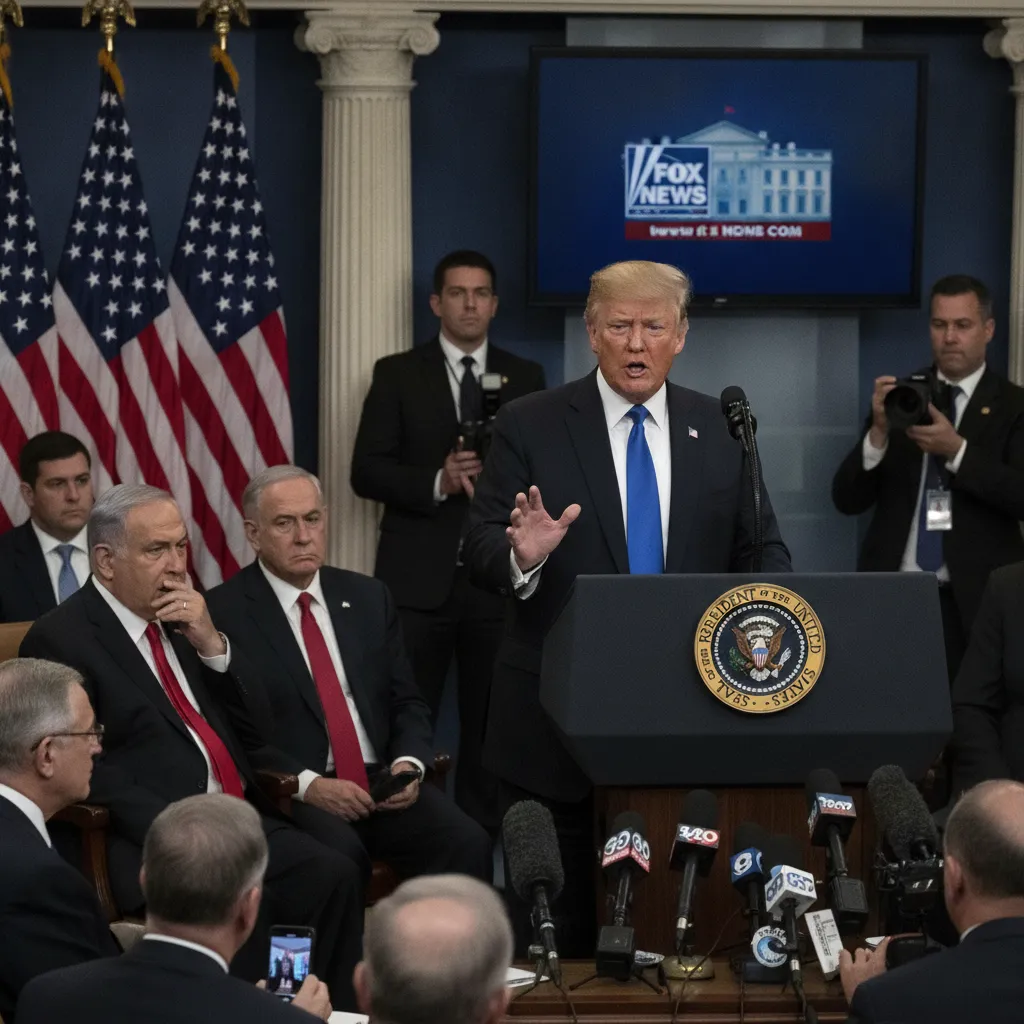
In a move that caught both political allies and adversaries off guard, President Donald Trump announced on Election Day that the United States would end its nearly 4 billion dollar annual aid package to Israel. Speaking with Fox News, the president suggested that the Jewish state has become sufficiently successful and wealthy to sustain itself without American financial support. While Trump has historically been one of the most pro-Israel presidents in modern memory, this sudden pivot suggests a potential sea change in how the White House views its relationship with Prime Minister Benjamin Netanyahu.
The announcement was characteristically vague, leaving analysts to wonder if the president intends to scrap the current agreement immediately or simply let it expire at the end of its term in 2028. Because much of this aid is spent on weapons produced by American manufacturers, any abrupt stop could have significant ripple effects for US businesses and domestic employment. Some foreign policy experts, including former State Department official Brett McGurk, caution against overstating the move, noting that the strategic military bond between the two nations remains deep regardless of the specific funding mechanism.
Beyond the financial logistics, the move appears to be a calculated response to a shifting political landscape within the United States. By questioning the sustainability of the aid, Trump seems to be acknowledging a growing sentiment among both progressives and certain wings of the MAGA movement that the cost of supporting Israel is becoming a political liability. In a surprising turn, Trump echoed talking points similar to those of Democratic critics like Senator Abdul El-Sayed, who has argued that American taxpayers should not be footing the bill for foreign conflicts while facing rising costs at home.
This shift signals a widening fracture in the long-standing bipartisan consensus that has defined US-Israel relations for decades. As Israel remains in a state of political limbo and the US grapples with internal divisions over the conflict in Gaza, the uncertainty regarding future arms sales and military backing creates a volatile geopolitical environment. Whether this is a genuine strategic pivot or a tactical distraction to divert attention from midterm election results, it marks a new and unpredictable era for the special relationship between Washington and Jerusalem.